Cosmic Loneliness: Are We Truly Alone?
A reflective look at the Fermi paradox, the Kardashev scale, and the unsettling silence of the cosmos.
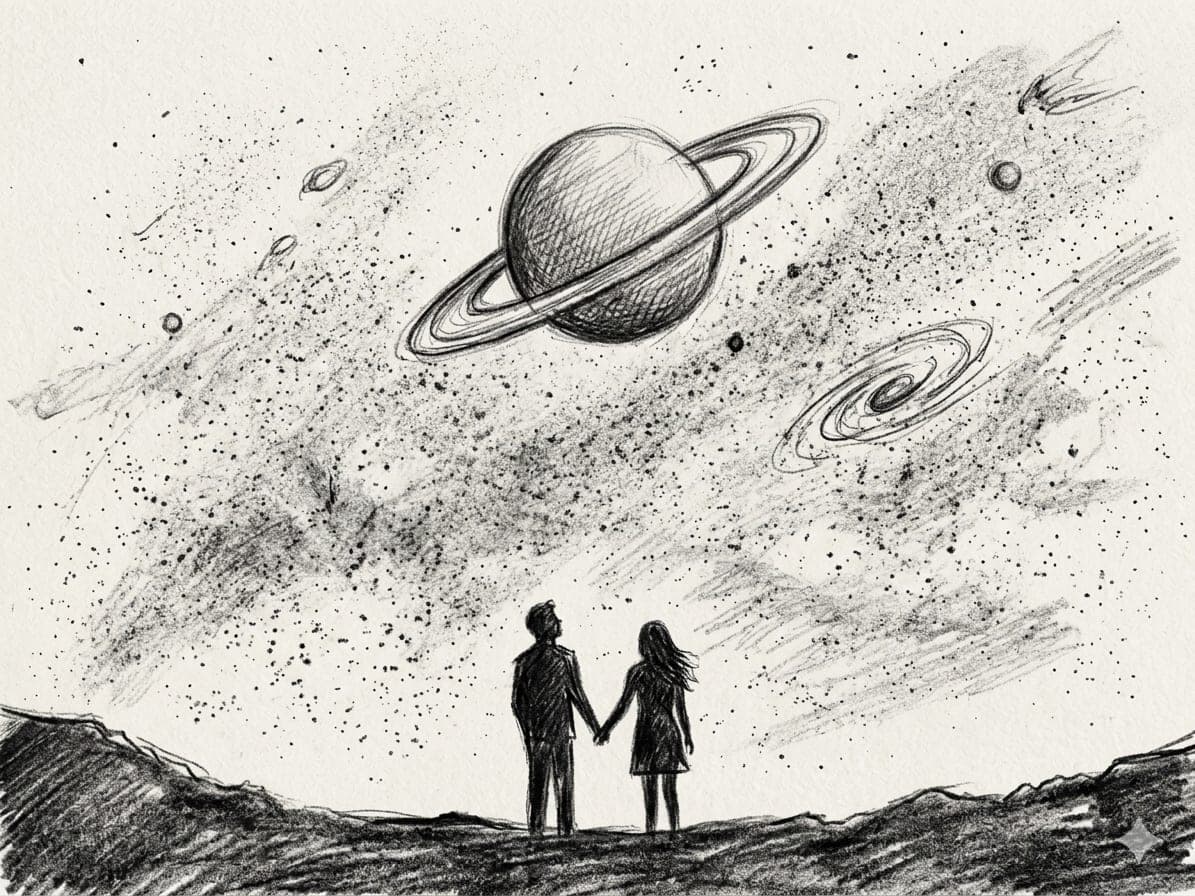
Imagine you wake up one morning and something is off.
No alarm clock. No footsteps downstairs. No one calling your name.
You rush through the house. No family. No neighbors. No sounds from the street. Every door is shut. Every room is empty.
You are alone.
If such a thing happened, the silence would feel unbearable.
In a strange way, this is the same silence humanity has faced for generations.

We live on a pale blue dot: a small world inside one galaxy among countless galaxies. By every reasonable estimate, there should be many worlds where life had the chance to emerge.
So where is everybody?

The Fermi Paradox
That question is commonly linked to physicist Enrico Fermi, who famously asked, "Where is everybody?" in 1950.
If the universe is old, large, and potentially life-friendly, why have we not seen clear evidence of advanced extraterrestrial civilizations?
One practical answer is distance. Even with modern technology, interstellar travel is brutally hard. Reaching Mars takes months; reaching even the nearest star would take far longer than a human lifetime.
But distance alone does not fully satisfy the question. Over cosmic timescales, even slow expansion should leave traces.
The Level of the Game
The Kardashev scale offers one way to imagine advanced civilizations:
- Type I: uses energy available on its home planet.
- Type II: uses energy from its host star (often discussed with ideas like Dyson spheres).
- Type III: uses energy on the scale of an entire galaxy.

If civilizations at those levels exist, we may be too early, too primitive, or simply too limited in our detection methods to notice them.
Their communication systems might not resemble radio at all. Their engineering could look like natural cosmic noise to us.
The Hurdles of the Race
There is another possibility: life does not reliably survive long enough to become cosmic.

Planets may host life for a while, only for extinction events, environmental collapse, war, or technological self-destruction to end the story before it reaches interstellar maturity.
This is often discussed as the Great Filter: a difficult barrier that very few civilizations cross.
If the filter is behind us, we are lucky. If it is ahead of us, we should be worried.
No Final Conclusion
There is no final answer yet.
Maybe the universe is full of simple life but poor in intelligent life. Maybe advanced civilizations are rare and far apart in time. Maybe we are looking with the wrong tools. Maybe we are early.
What we do know is this: cosmic silence is not empty. It is a question.
And for now, it is the loudest one we have.